
MRD CERAMIC & SELF-HEALING COATINGS
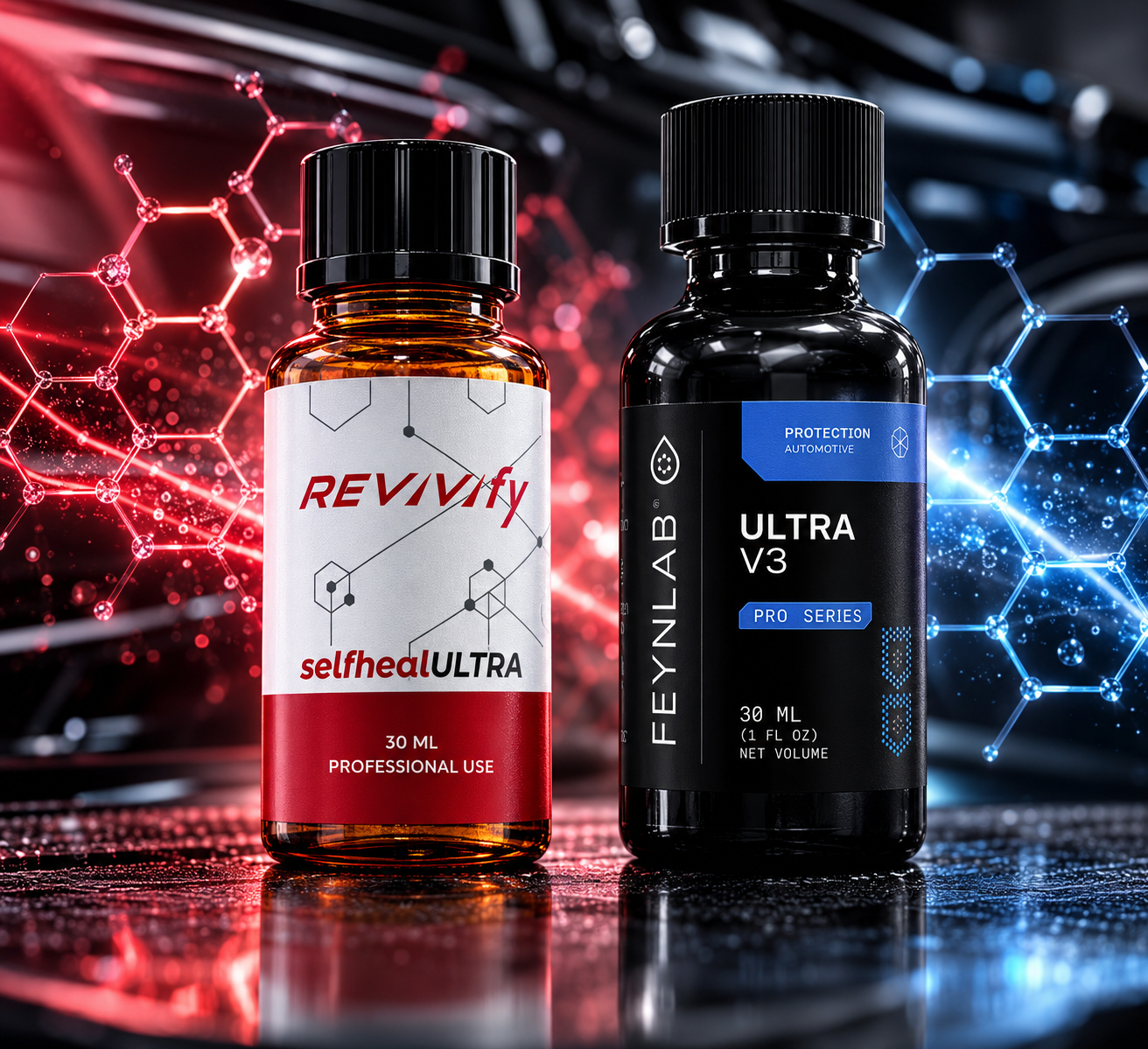
Not every vehicle owner needs the same level of paint protection. At Mission Ready Detailing (MRD), we believe in educating our customers so they can make the best decision for their vehicle, driving habits, expectations, and budget. Whether you drive a brand-new luxury vehicle, a daily commuter, a work truck, or a weekend show car, understanding the differences between ceramic and self-healing coatings is the first step toward protecting your investment.
1. Who should consider a ceramic coating?
Ceramic coatings are ideal for vehicle owners who want to preserve their paint, improve gloss, and make routine cleaning easier.
A ceramic coating may be right for you if:
- You plan to keep your vehicle for several years.
- You want your vehicle to maintain a glossy, well-maintained appearance.
- You frequently drive in rain, snow, or road salt.
- You want dirt, grime, and contaminants to be easier to remove.
- You want protection against environmental contamination and UV exposure.
- You are willing to perform basic maintenance to preserve the coating.
Best for: Daily drivers, family SUVs, trucks, luxury vehicles, and enthusiasts who want easier maintenance and long-term paint protection.
2. Who should consider a self-healing coating?
Self-healing coatings are designed for vehicle owners who want enhanced protection against minor surface scratches and swirl marks, in addition to the benefits associated with protective coatings.
A self-healing coating may be right for you if:
- You own a black or dark-colored vehicle that easily shows swirl marks.
- You are particular about your vehicle's appearance.
- You want to reduce the visibility of certain light surface scratches over time.
- You frequently wash your vehicle and want additional protection against minor wash-induced marring.
- You own a luxury, exotic, collector, or high-value vehicle.
- You plan to keep your vehicle for many years.
Best for: Owners who place a high priority on maintaining an exceptional paint finish and want advanced surface protection. Important: Self-healing performance depends on the coating formulation, scratch depth, temperature, and manufacturer specifications. Deep scratches, rock chips, and damage that penetrates the coating will not self-heal.
3. What is the difference between FEYNLAB ceramic and REVIVIFY self-healing coatings?
Feature Ceramic coating Self-healing coating
Enhanced gloss Yes Yes
Water repellency Yes Yes
Easier washing Yes Yes
Chemical resistance Yes Yes
UV/environmental protection Yes Yes
Self-repair of minor surface marring Generally no Yes, within product limits
Rock-chip protection Generally no Yes, within product limits
Maintenance required Yes Yes
The biggest difference: Traditional ceramic coatings focus on chemical resistance, hydrophobic performance, gloss, and easier maintenance. Self-healing coatings add the ability to recover from certain minor surface defects under appropriate conditions.
4. Is a ceramic coating worth it for a daily driver?
Absolutely, provided the benefits align with your budget and maintenance habits. Daily drivers are exposed to road grime, bird droppings, insect residue, winter salt, sunlight, and other contaminants. A quality ceramic coating can make these contaminants easier to clean while helping preserve the vehicle's appearance. For drivers throughout Chicagoland and Will County, coatings can be especially beneficial during harsh Illinois winters.
5. Is a self-healing coating worth the additional investment?
It can be, particularly for owners who are frustrated by light swirl marks and fine scratches. If you regularly notice fine wash scratches in direct sunlight, a self-healing coating may provide benefits beyond a conventional ceramic coating. However, if your primary goals are water repellency, gloss, and easier cleaning, a traditional ceramic coating may be the more economical choice. MRD's philosophy: We recommend protection based on your needs—not simply the most expensive package.
6. Should I coat a brand-new vehicle?
Yes. In fact, a new vehicle is often an excellent candidate for paint protection.
New vehicles can already have paint imperfections caused by transportation, dealership washing, improper handling, and storage.
Before applying a coating, MRD evaluates the paint to determine whether decontamination or paint correction is necessary.
Protecting a properly prepared new vehicle can help maintain its appearance from the beginning of ownership.
7. Is ceramic coating worth it on an older vehicle?
Yes, depending on the condition of the paint.
A ceramic coating does not require a brand-new vehicle. Older vehicles can benefit significantly from proper paint correction and protection.
However, coatings do not repair peeling clear coat, failing paint, rust, or deep scratches.
MRD evaluates the existing paint condition before recommending a protection package.
8. Do black vehicles benefit more from self-healing coatings?
Black vehicles do not necessarily receive more protection, but they often show the cosmetic benefits more clearly.
Dark-colored vehicles tend to reveal:
- Fine swirl marks
- Wash-induced scratches
- Water spotting
- Hazy paint finishes
- Minor surface imperfections
A self-healing coating can help reduce the appearance of qualifying light marring, making it especially attractive to owners of black and dark-colored vehicles.
9. Will ceramic or self-healing coatings prevent rock chips?
No. Neither should be considered a replacement for paint protection film (PPF).
Ceramic coatings and self-healing liquid coatings generally do not provide the impact resistance necessary to reliably prevent rock chips from highway debris.
For customers concerned about rock chips, MRD may recommend paint protection film for high-impact areas, combined with an appropriate coating for easier maintenance.
10. Do I still need to wash my vehicle after it is coated?
Yes!
A coated vehicle is easier to maintain, not maintenance-free.
Regular washing helps remove contaminants before they can cause staining or degrade coating performance.
We recommend:
- Proper hand-washing techniques.
- Quality automotive wash products.
- Clean microfiber towels and wash mitts.
- Prompt removal of bird droppings and insect residue.
- Avoiding abrasive brushes and automatic friction washes.
- Periodic coating inspections and maintenance.
11. Is ceramic coating worth it if I lease my vehicle?
Yes!
If you lease a vehicle for two or three years and want easier maintenance and an improved appearance, a shorter-term coating may be appropriate.
However, an expensive long-term coating may not offer the best value for a short lease.
MRD can recommend protection options based on your anticipated ownership period.
12. Who may NOT need ceramic or self-healing coating?
Professional coatings are not automatically the best investment for every customer.
You may not need an advanced coating if:
- You plan to sell or trade the vehicle very soon.
- You rarely wash or maintain your vehicle.
- You are satisfied with conventional wax or sealant protection.
- Your paint has serious clear-coat failure or deterioration.
- Your primary concern is preventing rock chips rather than maintaining the paint finish.
- The coating cost exceeds what you are comfortable investing in the vehicle.
In these situations, MRD may recommend a more economical paint protection service or address paint problems before coating.
13. Does my vehicle need paint correction before coating?
Not always, but proper preparation is essential.
Paint correction removes or reduces defects such as swirl marks, oxidation, and light scratches.
Coatings preserve the appearance of the underlying finish; they do not permanently conceal significant defects.
MRD evaluates every vehicle and discusses the appropriate level of correction before applying protection.
Customers may also choose limited correction after understanding how existing imperfections will affect the final appearance.
14. How long will a ceramic or self-healing coating last?
Coating longevity varies based on:
- The specific coating product and application system.
- Environmental exposure.
- Washing methods and frequency.
- Vehicle storage conditions.
- Maintenance practices.
- Manufacturer requirements.
Some coatings are designed for shorter protection periods, while others offer multi-year performance when properly applied and maintained. MRD explains the expected service life, maintenance requirements, and applicable warranty for each coating package.
15. Which coating should I choose?
Choose a ceramic coating if: You want enhanced gloss, easier washing, water repellency, and environmental protection without necessarily needing self-healing technology.
Choose a self-healing coating if: You want premium finish preservation and the ability to recover from certain fine surface scratches and swirl marks.
Choose PPF combined with a coating if: You want protection against physical road debris in vulnerable areas, along with coating-related maintenance benefits.
THE MRD DIFFERENCE
At Mission Ready Detailing, we don't believe every customer needs the most expensive coating available.
We believe in the right protection for the right vehicle. Our process starts with evaluating your vehicle, understanding how you use it, reviewing your expectations, and recommending a solution that makes sense. Whether you're protecting a brand-new vehicle, preserving a weekend cruiser, or maintaining a hard-working daily driver, MRD is committed to helping you make an informed decision.
MISSION READY DETAILING
Veteran Owned | Professional Paint Correction | Ceramic Coatings | Self-Healing Coatings | Paint Protection
Gear Up. Get Clean. Stay Mission Ready.
Schedule a paint protection consultation with MRD and find out which coating is right for your vehicle.
For product information click the links below.
www.feynlab.com
www.teamrevivifyusa.com